Digital transformation for small and mid-size companies in the Gulf: where to start
A step-by-step path from spreadsheets to connected systems for Gulf SMEs: priorities, a staged roadmap, quick wins, mistakes to avoid and how to measure.
"Digital transformation" sounds like a programme for banks and ministries. For a company with 20 to 200 people it means something simpler: fewer spreadsheets, fewer re-typed numbers, and decisions based on today's figures instead of last month's.
Across the Gulf, national programmes such as Saudi Vision 2030 and mandatory e-invoicing are pushing companies in this direction anyway. This guide gives a practical order of work, sized for small and mid-size companies, with checklists for each stage and the mistakes we see most often.
What digital transformation means for an SME
For an SME, digital transformation means recording each business event once, in a system everyone trusts, and using that data to run the company. It does not mean buying the most advanced tools or replacing everything at once.
In practice, a transformed SME has:
- one source of truth for money, stock, assets and people,
- invoices and reports produced by the system, not assembled by hand,
- staff who can find what they need in their own language, on a computer or a phone,
- owners who can see today's position without waiting for month end.
Why now in the Gulf
Regulation is the strongest push. In Saudi Arabia, ZATCA e-invoicing Phase 1 started on 4 December 2021, and Phase 2 integration has been rolled out in waves since 1 January 2023. Our ZATCA Phase 2 guide explains what it requires. Once invoicing has to be digital, connecting the rest of the business is the logical next step.
Before you start: a short readiness check
The direct answer: before buying anything, know your processes, your data and who is responsible.
- List your core processes. Selling, buying, invoicing, stock, payroll, assets. Note who does each and with which tool.
- Find the pain. Where are numbers re-typed? Where do errors appear? What takes days that should take minutes?
- Check your data. How many customer and item lists exist, and do they agree?
- Name an owner. One person inside the company who is responsible for the rollout.
- Pick three measures you will track from the start (more on this below).
The five-step order of work
The direct answer: fix the money first, then stock, assets, people, and only then what makes you different. Each step builds on the clean data of the one before.
Step 1: Fix the money first
Start where errors cost the most: invoicing, accounting and tax. Moving to a cloud ERP with compliant e-invoicing gives you:
- invoices that meet the tax authority's requirements,
- one ledger instead of several spreadsheets,
- reports you can trust at month end.
If you run more than one company, choose a system that handles several companies from one login. For a full checklist of what to compare, read choosing a cloud ERP in Saudi Arabia and Egypt.
Step 2: Connect stock and sales
Once accounting is solid, connect inventory and point of sale so every sale updates stock and accounts at once. This removes a large share of manual reconciliation, because stock counts stop being a guessing game and sales no longer need to be re-entered in the books.
What to set up at this stage:
- a clean item list with units, prices and categories,
- warehouses or branches that match how stock really moves,
- purchasing linked to suppliers and to accounts payable,
- a regular count routine to confirm the system matches the shelves.
Step 3: Know what you own
Laptops, vehicles, tools and equipment are often a significant investment, and among the least tracked. Many companies only discover missing assets when someone leaves or something breaks.
A practical approach:
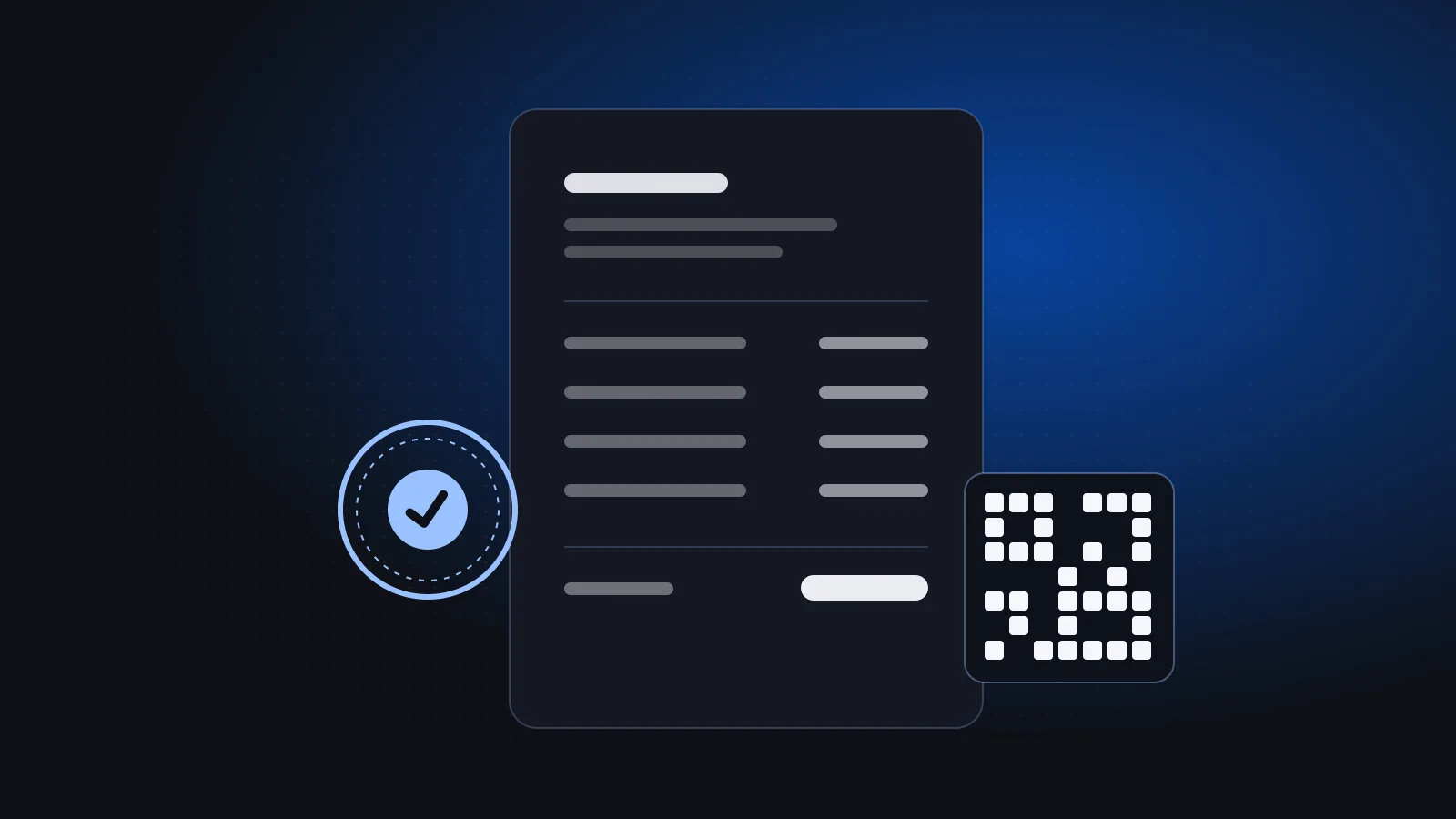
- tag assets with QR codes and record who holds each one and where it is,
- run audits with a phone by scanning labels instead of ticking printed lists,
- track lending with check-in and check-out and due dates,
- log maintenance and costs against each asset.
Step 4: Bring people and payroll in
HR and payroll, including leave, allowances and end-of-service, belong in the same system as accounting, so salaries post to the books without re-keying. Keeping people data next to finance also makes it easier to link assets to employees and costs to departments.
Step 5: Build what makes you different
Only now consider custom software: a customer portal, a mobile app for field teams, or AI that reads documents for you. With the basics connected, these projects have clean data to work with. See custom software or off-the-shelf for how to decide.
A staged roadmap at a glance
| Stage | Focus | Typical tools | Signs it is done |
|---|---|---|---|
| 1 | Money and tax | Cloud ERP with e-invoicing | Month-end close from one ledger |
| 2 | Stock and sales | Inventory, POS, purchasing | Stock counts match the system |
| 3 | Assets | QR asset management | Every asset has a holder and location |
| 4 | People | HR and payroll | Payroll posts without re-keying |
| 5 | Differentiation | Custom apps, portals, AI | Built on clean, connected data |
Move to the next stage only when the current one is used daily by the people it was meant for.
Mistakes we see often
- Buying everything at once. Roll out in stages, so each one is adopted before the next starts.
- Skipping data clean-up. Migrating messy customer and item lists into a new system just moves the mess.
- No owner. Every rollout needs one person inside the company who is responsible for it.
- English-only tools. If staff work in Arabic, the system must too. See what Arabic-first software means.
- Keeping the old spreadsheets "just in case". Parallel systems quietly become the real system again. Set a cut-off date.
- Training once and stopping. New staff join and processes change. Plan short refreshers.
Measure it
Pick three numbers before you start and measure them again after each stage. Good candidates:
| Measure | Why it matters |
|---|---|
| Days to close the month | Shows whether accounting is truly connected |
| Hours spent on stock counts | Shows whether inventory data is trusted |
| Invoice errors or credit notes | Shows quality at the point of sale |
| Time to find an asset or its holder | Shows whether asset tracking works |
Write the starting values down. Without a baseline, improvement becomes a matter of opinion.
Where Phoonix fits
Phoonix is a software company based in Egypt that has spent seven years building for Saudi Arabia, the Gulf and Egypt. Two of our products map directly to the stages above:
- Azha ERP: a cloud ERP in Arabic and English, with several companies from one login, 12 modules on one ledger, ZATCA e-invoicing including Phase 2, and custom labels.
- UsoolSaver: asset management with QR labels, holders and locations, lending with due dates, phone audits, maintenance and costs.
For stage 5 we build custom software: web platforms, iOS and Android apps, AI features, CRM systems, integrations and cloud hosting. See examples in our work.
Frequently asked questions
Where should a small company start its digital transformation?
Start with invoicing, accounting and tax, because errors there cost the most and regulation often requires it. A cloud ERP with compliant e-invoicing gives you one ledger to build on. Then connect stock and sales.
Does digital transformation require a large budget?
Not necessarily. Rolling out in stages spreads cost over time and lets each stage prove its value before the next. Cloud subscriptions also avoid buying servers upfront.
How long does each stage take?
It depends on company size, data quality and how many people are involved. Treat a stage as done when staff use it daily and your chosen measures improve, not when the software is installed.
Do we need custom software to transform?
Usually not at first. Standard processes are well served by good products. Custom software pays off later, for the processes that make your company different.
Not sure where your company should start? Book a free 30-minute call and leave with a rough plan, timeline and price range, or explore our services.